
Introduction
You fall asleep exhausted, only to find yourself staring at the ceiling at 2:37 a.m. wondering, why do I wake up in the middle of the night when all I want is uninterrupted rest? It’s frustrating, confusing, and often leaves you feeling drained the next morning.
Nighttime waking is far more common than most people realize. Many adults wake up briefly several times during the night, but when those awakenings become frequent or prolonged, they can interfere with your energy, mood, concentration, and overall health. What starts as an occasional annoyance can slowly become a cycle of stress and poor sleep.
The good news is that waking in the middle of the night usually has an identifiable cause. Sometimes it’s linked to stress, diet, hormones, or lifestyle habits. In other cases, it may point to an underlying sleep disorder or health issue that deserves attention.
Understanding what’s happening inside your body during sleep can help you break the pattern and finally get the deep, restorative rest your body needs.


Understanding Normal Nighttime Awakenings
Before assuming something is wrong, it helps to know that brief awakenings are actually part of normal sleep architecture.
Throughout the night, your body cycles through different sleep stages, including light sleep, deep sleep, and REM sleep. At the end of each cycle, the brain briefly becomes more alert. Most people drift back to sleep without even remembering it.
Problems arise when these awakenings become noticeable or difficult to recover from. If your brain becomes fully alert, stress hormones increase, or environmental disturbances interrupt your rhythm, you may suddenly find yourself wide awake.
How Sleep Cycles Work
A typical sleep cycle lasts around 90 minutes. During the night, your body repeats these cycles four to six times.
The stages include:
- Light sleep
- Deep restorative sleep
- REM sleep associated with dreaming
As the night progresses, REM sleep becomes longer while deep sleep decreases. This makes the second half of the night more vulnerable to awakenings.
Why Some People Remember Waking Up
Certain people are naturally lighter sleepers. Others become more aware of awakenings because of anxiety, stress, or hypervigilance. Once the brain starts associating nighttime with wakefulness, it can become easier to wake repeatedly.
Common Reasons You Wake Up at Night
There isn’t always a single explanation for interrupted sleep. Often, several small factors combine to create the problem.
Stress and Anxiety
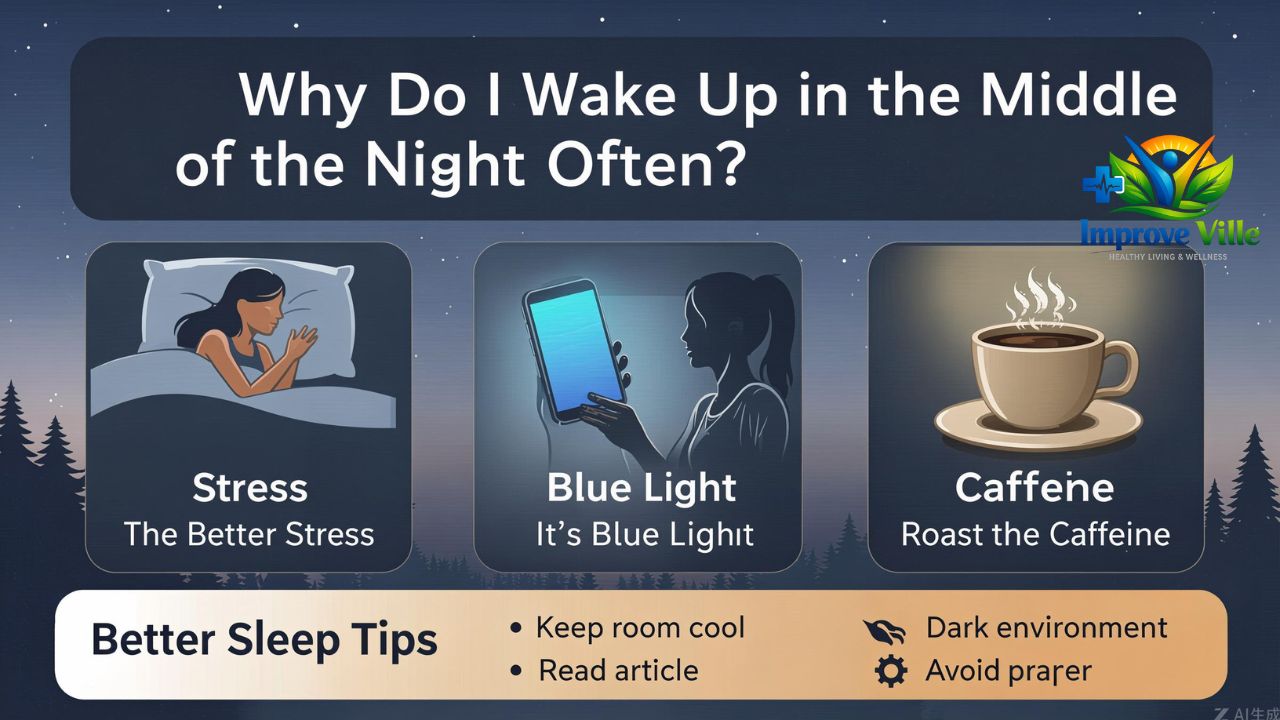
Stress is one of the biggest reasons people wake during the night. Even when you fall asleep easily, your nervous system may stay partially activated.
When cortisol and adrenaline remain elevated, your brain becomes more sensitive to disturbances. Racing thoughts, worry, or emotional tension can make it difficult to stay asleep.
Signs stress may be affecting your sleep include:
- Waking around the same time every night
- Feeling mentally alert despite physical exhaustion
- Difficulty falling back asleep
- Increased heart rate during awakenings
Poor Sleep Habits
Your evening routine has a major impact on sleep quality. Irregular schedules, excessive screen time, and stimulating activities before bed can disrupt circadian rhythms.
Common sleep-disrupting habits include:
- Drinking caffeine late in the day
- Using phones or laptops before bed
- Going to sleep at inconsistent times
- Eating heavy meals late at night
- Falling asleep with the television on
Alcohol Consumption
Many people believe alcohol helps them sleep because it causes drowsiness initially. However, alcohol disrupts REM sleep and often leads to fragmented sleep later in the night.
You may fall asleep faster but wake several hours later feeling restless or overheated.


Medical Conditions That Interrupt Sleep
Sometimes persistent nighttime waking points to an underlying medical issue rather than lifestyle factors alone.
Sleep Apnea
Sleep apnea occurs when breathing repeatedly stops and starts during sleep. These breathing interruptions briefly wake the brain, even if you don’t fully remember it.
Common symptoms include:
- Loud snoring
- Gasping during sleep
- Morning headaches
- Dry mouth
- Daytime fatigue
Sleep apnea becomes more common with age and weight gain, but it can affect people of all body types.
Restless Legs Syndrome
This neurological condition creates uncomfortable sensations in the legs, often worsening at night.
People with restless legs syndrome may feel:
- Tingling
- Crawling sensations
- Urges to move the legs
- Temporary relief with movement
These symptoms can repeatedly interrupt sleep cycles.
Acid Reflux
Heartburn and acid reflux tend to worsen when lying flat. Stomach acid moving into the esophagus may trigger coughing, discomfort, or sudden waking.
Eating late meals or spicy foods close to bedtime often contributes to the problem.
Chronic Pain
Conditions like arthritis, fibromyalgia, migraines, or back pain can make it difficult to maintain uninterrupted sleep. Even minor discomfort becomes more noticeable during lighter sleep stages.
Hormones and Age-Related Sleep Changes
Sleep patterns naturally evolve over time, especially due to hormonal fluctuations.
Menopause and Perimenopause
Hormonal shifts during menopause frequently cause nighttime waking.
Symptoms may include:
- Night sweats
- Hot flashes
- Increased anxiety
- Changes in body temperature regulation
Many women notice sleep disturbances years before menopause officially begins.
Pregnancy
Pregnancy affects sleep in multiple ways:
- Frequent urination
- Physical discomfort
- Hormonal changes
- Heartburn
- Anxiety
These factors often lead to fragmented sleep, especially during the third trimester.
Aging and Sleep Patterns
As people age, deep sleep decreases naturally. Older adults may become more sensitive to noise, temperature changes, or internal body signals.
This doesn’t necessarily mean something is wrong, but it can make nighttime awakenings more common.
The Role of Blood Sugar and Diet
Your body’s metabolism continues working while you sleep. Sudden blood sugar fluctuations can contribute to waking during the night.
Low Blood Sugar During Sleep
If blood sugar drops too low overnight, the body releases stress hormones to raise glucose levels. This can cause sudden awakening, sweating, or feelings of anxiety.
People sometimes experience:
- Night sweats
- Hunger
- Shakiness
- Racing heart
Skipping meals or eating excessive sugar before bed may increase the risk.
Foods That Can Affect Sleep
Certain foods and drinks are more likely to interfere with sleep quality.
Potential culprits include:
- Caffeine
- Chocolate
- Spicy foods
- Alcohol
- Sugary desserts
- Energy drinks
Meanwhile, balanced evening meals with protein and complex carbohydrates may support steadier sleep.
Environmental Factors You Might Overlook
Sometimes the problem isn’t internal at all.
Room Temperature
Your body temperature naturally drops during sleep. Rooms that are too warm can interfere with deep sleep and increase nighttime waking.
Most sleep experts recommend cooler bedroom temperatures for optimal rest.
Noise Pollution
Even subtle sounds can trigger micro-awakenings. Traffic, pets, snoring partners, or electronic noises may disrupt sleep without you fully realizing it.
White noise machines or earplugs can help reduce environmental disruptions.
Light Exposure
Artificial light affects melatonin production. Streetlights, televisions, or glowing devices may signal to the brain that it’s time to wake up.
Blackout curtains and minimizing screen exposure can make a noticeable difference.


Why Do I Wake Up in the Middle of the Night at the Same Time?
Waking at the same time every night often points to a pattern in your body’s internal clock.
Circadian Rhythm Disruptions
Your circadian rhythm controls sleep and wake timing. Stress, shift work, jet lag, and inconsistent schedules can throw this system off balance.
If your body expects wakefulness at a certain hour, it may repeatedly alert you at that time.
Cortisol Spikes
Cortisol normally rises gradually toward morning to help you wake naturally. However, chronic stress can trigger premature cortisol surges during the night.
This may leave you suddenly alert around 3 or 4 a.m.
Conditioned Wakefulness
Sometimes the brain learns the habit of waking. After enough nights of frustration, your body begins anticipating wakefulness, reinforcing the cycle.
This is especially common in chronic insomnia.
How Technology Impacts Sleep Quality
Modern life constantly exposes the brain to stimulation.
Blue Light Exposure
Phones, tablets, and televisions emit blue light that suppresses melatonin production. This can delay sleep onset and interfere with sleep depth.
Even brief scrolling sessions before bed may affect sleep quality more than people realize.
Mental Overstimulation
Social media, emails, news, and streaming content keep the brain mentally engaged. Instead of winding down naturally, the nervous system remains activated late into the night.
Creating a screen-free wind-down period can help the brain transition into sleep mode.
When Nighttime Waking May Signal Insomnia
Occasional awakenings are normal. Persistent sleep disruption is different.
Signs of Chronic Insomnia
You may be dealing with insomnia if you regularly:
- Wake multiple nights each week
- Struggle to fall back asleep
- Feel exhausted during the day
- Experience irritability or brain fog
- Worry about sleep constantly
Insomnia often becomes self-reinforcing because anxiety about sleep increases arousal.
The Emotional Side of Sleeplessness
Repeated poor sleep can affect emotional health significantly. Many people become trapped in cycles of frustration and fear surrounding bedtime.
The more pressure you place on sleep, the harder it sometimes becomes.
Practical Ways to Sleep Through the Night
Improving sleep often requires a combination of small adjustments rather than one dramatic solution.
Create a Consistent Sleep Schedule
Your body thrives on predictability. Going to bed and waking up at the same time daily helps regulate circadian rhythms.
Even weekends matter more than many people think.
Develop a Relaxing Night Routine
Calming rituals signal to the brain that sleep is approaching.
Helpful habits include:
- Reading
- Gentle stretching
- Meditation
- Warm showers
- Soft lighting
- Deep breathing exercises
Limit Stimulants
Try reducing caffeine intake after midday and avoid nicotine close to bedtime.
Pay attention to hidden caffeine sources such as:
- Energy drinks
- Chocolate
- Pre-workout supplements
- Certain teas
Avoid Clock Watching
Checking the time repeatedly can increase anxiety and make falling back asleep harder.
If possible, turn clocks away from view during the night.
What to Do When You Wake Up
Your response to waking matters almost as much as the awakening itself.
Stay Calm
Panicking about lost sleep increases stress hormones and makes returning to sleep more difficult.
Instead of forcing sleep, focus on relaxing the body.
Avoid Bright Lights
Keep lighting dim if you need to get out of bed. Bright light signals to the brain that morning has arrived.
Try Quiet Relaxation
If sleep doesn’t return within about 20 minutes, consider doing something calming like:
- Reading a physical book
- Listening to soft music
- Practicing breathing exercises
Avoid screens whenever possible.
Natural Remedies That May Help
Some people find relief through natural sleep-supportive strategies.
Magnesium
Magnesium supports muscle relaxation and nervous system function. Some individuals report improved sleep quality with supplementation.
Herbal Teas
Chamomile, valerian root, and passionflower tea are commonly used for relaxation before bedtime.
Meditation and Mindfulness
Mindfulness practices help reduce nighttime mental activity and calm the nervous system.
Consistent meditation may improve both sleep onset and sleep maintenance over time.
When to See a Doctor
Sometimes waking at night requires professional evaluation.
Consider speaking with a healthcare provider if you experience:
- Loud snoring or breathing pauses
- Severe daytime fatigue
- Persistent insomnia
- Depression or anxiety symptoms
- Frequent nightmares
- Sudden changes in sleep patterns
Sleep specialists can evaluate for conditions like sleep apnea, insomnia disorders, or neurological issues.
FAQ
Why do I wake up in the middle of the night every night?
Consistently waking during the night may result from stress, anxiety, poor sleep habits, hormonal changes, or medical conditions like sleep apnea or insomnia.
Is it normal to wake up at 3 a.m. every night?
Occasional waking is normal, but repeated 3 a.m. awakenings may be linked to stress hormones, circadian rhythm disruptions, or anxiety-related insomnia.
Can anxiety cause nighttime waking?
Yes. Anxiety activates the nervous system and increases cortisol levels, making it harder to stay asleep through the night.
Does drinking water before bed affect sleep?
Drinking excessive fluids before bedtime can increase nighttime bathroom trips, interrupting sleep cycles.
Why do I wake up sweating at night?
Night sweats may result from hormones, stress, infections, medications, or sleeping in an overly warm environment.
Can eating late cause interrupted sleep?
Yes. Heavy meals, spicy foods, and alcohol close to bedtime may trigger indigestion, reflux, or restless sleep.
How many times is it normal to wake up during the night?
Brief awakenings several times per night are normal. Problems arise when you remain awake long enough to notice or struggle returning to sleep.
Can phone use before bed affect sleep quality?
Absolutely. Blue light exposure and mental stimulation from phones can interfere with melatonin production and sleep depth.
What is the best room temperature for sleep?
Most experts recommend a cool bedroom environment, generally around 60–67°F (15–19°C), for better sleep quality.
Conclusion
Waking during the night can feel discouraging, especially when it becomes a regular pattern. But in many cases, your body is sending signals worth paying attention to rather than simply “failing” at sleep. Stress, lifestyle habits, hormones, diet, environment, and underlying health conditions can all play a role in disrupted rest.
The encouraging part is that even small adjustments often lead to meaningful improvements over time. Better sleep habits, consistent routines, stress management, and medical support when needed can help restore healthier sleep patterns.
If you’ve been asking yourself why do I wake up in the middle of the night, remember that you’re not alone—and that understanding the cause is often the first step toward finally sleeping peacefully again.