
Introduction
You know that heavy, foggy feeling after too many sweets? One minute the dessert tastes amazing, and the next you are wondering why your energy, mood, and focus suddenly feel off. That is when many people start asking how long does it take for sugar to get out of your system and whether there is anything they can do to feel normal again.
The answer is not as simple as “one hour” or “one day,” because sugar does not leave the body like a stain being washed out. Your body breaks carbohydrates down into glucose, moves that glucose into the bloodstream, uses some for quick energy, stores some for later, and handles the rest depending on your activity level, hormones, meal size, sleep, stress, and overall health.
This topic matters because sugar can affect more than your waistline. A high-sugar meal can influence energy, hunger, thirst, sleepiness, cravings, concentration, and, for some people, blood glucose readings. Understanding the timeline helps you respond with common sense instead of panic.
The good news is that you do not need extreme cleanses, punishment workouts, or a “detox” drink to recover from a sugary meal. You need to understand what is happening inside your body and support it with steady, realistic choices.
how long does it take for sugar to get out of your system?
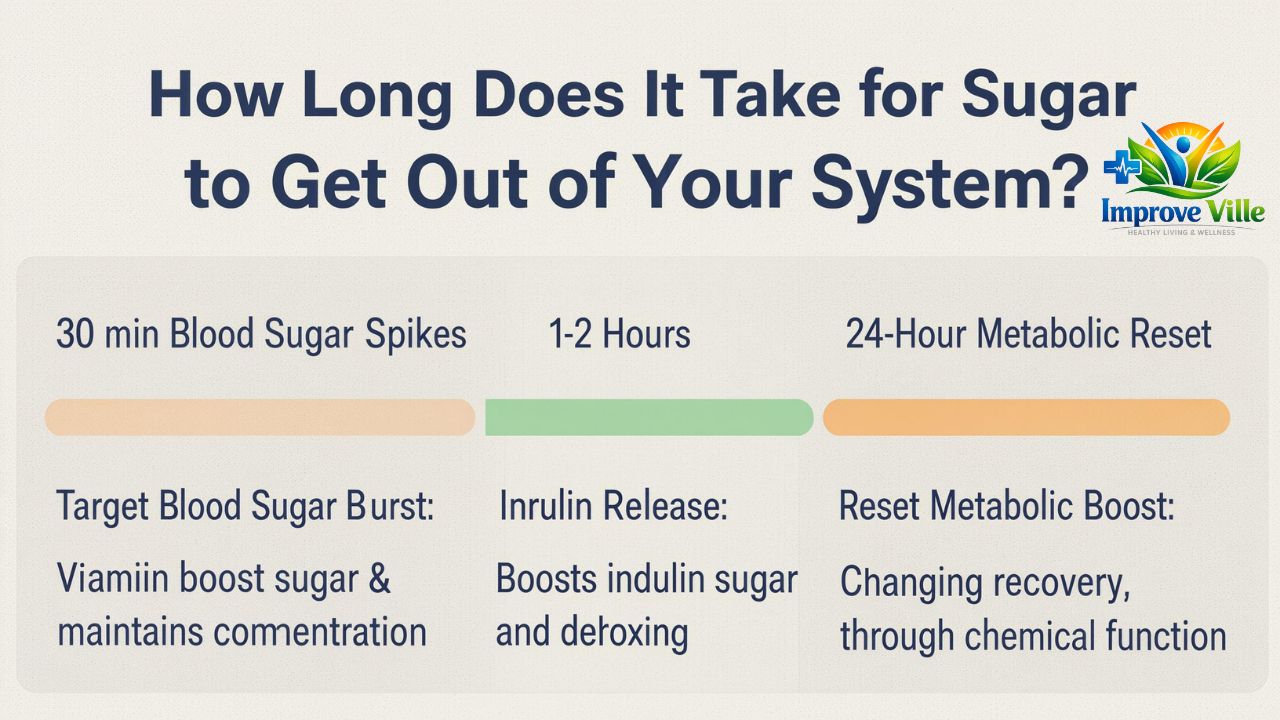
For most healthy adults, blood sugar from a typical meal usually rises within the first 15 to 30 minutes, often peaks around 60 minutes, and moves closer to baseline within about 2 to 3 hours. A very large sugary meal, a drink loaded with added sugar, poor sleep, stress, insulin resistance, or diabetes can make that timeline longer.
So, when people ask how long does it take for sugar to get out of your system, the practical answer is this: the immediate blood sugar rise may settle within a few hours, but cravings, appetite changes, water retention, fatigue, and the desire for more sweets can last longer. Some people feel fine after two hours. Others feel “off” for the rest of the day, especially after a big sugar spike and crash.
![Infographic: Sugar timeline showing 0–30 minutes digestion begins, 30–90 minutes blood sugar rises and insulin responds, 2–3 hours levels often settle, 24–72 hours cravings may ease with better meals.]
What “sugar leaving your system” really means
Sugar is not stored in your blood forever. After you eat carbohydrates, your digestive system breaks many of them into glucose. Insulin then helps move glucose from the bloodstream into cells, where it can be used for energy. Some glucose is stored as glycogen in your liver and muscles. If your body has more energy than it needs over time, excess calories may be stored as fat.
That means “getting sugar out” is really about blood glucose regulation, energy use, storage, and hormonal balance. Your body is not trying to cleanse sugar like poison. It is trying to manage fuel.
Added sugar vs natural sugar
Not all sugar-containing foods behave the same way in your body. A soda, candy bar, or sweet pastry can raise blood sugar quickly because it is often low in fiber, protein, and volume. Whole fruit contains natural sugars too, but it also brings fiber, water, vitamins, minerals, and plant compounds that slow digestion and make the overall effect gentler for many people.
This is why a bowl of berries and a can of soda are not the same experience, even if both taste sweet. The food package matters.
What happens after you eat sugar?
When you eat sugar or refined carbohydrates, digestion begins quickly. Simple sugars need less breakdown, while starches such as bread, pasta, and rice must be broken down into glucose first. Once glucose enters the bloodstream, your pancreas releases insulin to help move glucose into cells.
If the sugar load is small and balanced with protein, fiber, or fat, the rise may feel smooth. If the meal is mostly refined sugar, the rise can be sharper. That sharp rise may be followed by a noticeable dip, which is why some people feel tired, irritable, hungry, or mentally foggy after sweets.
The first 30 minutes
During the first half hour, your body is digesting and absorbing sugar. Sweet drinks and low-fiber desserts can move quickly because liquid sugar and refined carbohydrates require less work from digestion. You may feel a burst of energy, pleasure, or alertness because sweet foods can be rewarding and easy to overeat.
This is also the time when pairing sugar with something more substantial can make a difference. A dessert after a balanced meal usually affects you differently than candy on an empty stomach.
The 30-to-90-minute window
This is often the peak zone. Blood glucose may rise, insulin increases, and your body works to move glucose into cells. For someone with good insulin sensitivity, this process may be fairly efficient. For someone with insulin resistance, prediabetes, diabetes, hormonal imbalance, or high stress, glucose may stay elevated longer.
Many people who wonder how long does it take for sugar to get out of your system are really noticing this middle stage. They feel their body reacting but cannot tell whether it is normal, dangerous, or simply uncomfortable.
The 2-to-4-hour window
For many healthy people, blood sugar begins moving back toward a normal range within a few hours. However, the after-effects may not disappear instantly. You may feel hungry again sooner, especially if the sugary food lacked protein and fiber. You may also notice thirst, sleepiness, or cravings.
If you use a continuous glucose monitor or glucometer, you may see that different foods affect you differently. White bread, sweet drinks, and desserts may create one pattern, while beans, vegetables, oats, yogurt, eggs, nuts, or lean protein may create another.
Why sugar may stay with you longer than expected
The timeline changes from person to person because blood sugar is affected by more than the amount of sugar you ate. Your body is a living system, not a calculator. Two people can eat the same dessert and have very different reactions.
The same person can even react differently on different days. A sweet breakfast after poor sleep may hit harder than the same breakfast after a good night’s rest and a morning walk.
Factors that affect your sugar timeline
Several things can influence how long does it take for sugar to get out of your system in real life:
- Meal size: More sugar and refined carbs usually create a bigger glucose load.
- Fiber: Fiber slows digestion and may reduce sharp spikes.
- Protein and fat: These slow stomach emptying and can make the rise more gradual.
- Activity level: Muscles use glucose during movement, even light walking.
- Sleep: Poor sleep can make blood sugar control worse the next day.
- Stress: Stress hormones can raise blood glucose or make it harder to manage.
- Hydration: Dehydration can make you feel worse and may concentrate blood glucose.
- Medications: Some medicines can affect blood sugar.
- Diabetes or insulin resistance: Glucose may stay elevated longer and require medical guidance.
Sugar drinks often hit faster
Sugary drinks deserve special attention because they are easy to consume quickly and do not provide much fullness. Soda, sweet tea, energy drinks, sweet coffee drinks, juice cocktails, and many bottled beverages can send a lot of sugar into the body without the chewing and fiber that slow eating down.
If you are trying to feel better after too much sugar, cutting back on sweet drinks is often one of the fastest wins.
What if you have diabetes or insulin resistance?
If you have diabetes, prediabetes, or insulin resistance, the answer can be very different. Blood glucose may remain higher for longer because insulin is not working as effectively, the body is not making enough insulin, or medication timing and food intake are not properly matched.
For some people with diabetes, post-meal blood sugar can remain elevated beyond two or three hours, especially after a high-carbohydrate meal. That does not mean you should guess or make sudden medication changes. It means your personal target range, monitoring plan, food choices, and medication schedule should be guided by your healthcare provider.
When high blood sugar needs attention
Occasional tiredness after dessert is common, but certain symptoms deserve more care. Frequent urination, unusual thirst, blurry vision, unexplained fatigue, slow-healing cuts, or repeated high readings may point to blood sugar problems that need medical evaluation.
Seek urgent medical help if you have very high blood sugar with vomiting, confusion, trouble breathing, severe weakness, or signs of dehydration, especially if you have diabetes. High blood sugar can become serious when it is not treated correctly.
Do not confuse high sugar with low sugar
A sugar crash can feel uncomfortable, but true low blood sugar can be dangerous, especially for people using insulin or certain diabetes medications. Shakiness, sweating, dizziness, hunger, fast heartbeat, confusion, or faintness should not be ignored.
If you have diabetes and are told to follow a low-blood-sugar treatment plan, follow that plan. Do not try to “wait it out” because you are worried about eating sugar. In that situation, fast-acting carbohydrates may be medically necessary.
Can you speed up the process naturally?
You cannot magically erase sugar from your body, but you can help your body use glucose more steadily. The goal is not punishment. The goal is to reduce the spike-and-crash cycle and help your energy settle.
When people ask how long does it take for sugar to get out of your system, they often want quick relief. The best approach is gentle, practical, and safe.
Take a short walk
A short walk after eating can help your muscles use glucose. It does not need to be intense. Ten to twenty minutes of easy walking, light housework, or gentle movement can be enough to make a difference for many people.
Avoid hard exercise if you feel dizzy, shaky, nauseous, or unwell. If you have diabetes and your blood sugar is very high, follow your clinician’s advice because intense exercise may not always be appropriate.
Drink water
Water will not “flush sugar out” in a magical way, but hydration supports normal body function and can help you feel better. It may also reduce the temptation to keep sipping sweet drinks.
Choose plain water, sparkling water without added sugar, or unsweetened tea. If you are sweating heavily, vomiting, or dealing with very high blood sugar, hydration needs may be different, and medical guidance matters.
Eat your next meal wisely
One of the biggest mistakes after too much sugar is skipping the next meal to “make up for it.” That can backfire by making you overly hungry and more likely to crave sweets again.
A better next meal includes protein, fiber-rich carbohydrates, healthy fats, and plenty of volume from vegetables or fruit. For example, eggs with vegetables, lentil soup, Greek yogurt with berries, grilled chicken with salad, beans with brown rice, or oatmeal with nuts can all be steadier choices.
Prioritize protein and fiber
Protein and fiber help slow digestion and support fullness. They are not magic, but they can make your blood sugar pattern smoother and your cravings easier to manage.
Good options include eggs, fish, chicken, tofu, beans, lentils, plain yogurt, cottage cheese, nuts, seeds, oats, berries, apples, vegetables, and whole grains. The goal is not perfection; it is building meals that do not leave you chasing energy all day.
What about sugar cravings?
Cravings can last longer than the blood sugar spike itself. If you eat a lot of added sugar regularly, your taste preferences, habits, reward pathways, and meal patterns may all push you to want more. That does not mean you lack discipline. It means your brain and body are responding to a pattern.
For many people, cravings start feeling easier after a few days of more balanced eating. For others, it takes a couple of weeks to feel less pulled toward sweets. The timeline depends on how much added sugar you usually eat, how stressed you are, how well you sleep, and whether you are eating enough satisfying food.
Why quitting sugar suddenly feels hard
Going from a high-sugar routine to almost no sugar overnight can cause headaches, irritability, tiredness, low mood, or strong cravings in some people. These symptoms are usually related to changes in caffeine intake, meal size, habits, hydration, sleep, and the sudden loss of quick-energy foods.
A slower approach often works better. Instead of cutting everything at once, reduce sweet drinks, choose smaller portions, add protein to breakfast, and keep fruit available when you want something sweet.
A realistic 3-day reset
A gentle reset is not a cleanse. It is simply a short period of steady meals and fewer added sugars.
- Day 1: Drink water, take a walk after meals, and avoid sweet drinks.
- Day 2: Build each meal around protein and fiber.
- Day 3: Replace dessert-style snacks with fruit, yogurt, nuts, or a balanced snack.
By the third day, many people feel less bloated, more stable, and less driven by cravings. But if you have diabetes, an eating disorder history, pregnancy-related blood sugar issues, or take glucose-lowering medication, do not make major diet changes without guidance.
Foods that help you feel balanced after sugar
The best foods after a sugar-heavy day are not exotic. They are simple foods that slow digestion, support fullness, and help you return to normal eating.
Try building meals around:
- Lean protein: eggs, chicken, fish, tofu, turkey, beans, lentils
- High-fiber carbs: oats, barley, brown rice, quinoa, sweet potatoes, beans
- Non-starchy vegetables: spinach, cucumber, broccoli, peppers, carrots, salad greens
- Healthy fats: avocado, olive oil, nuts, seeds
- Naturally sweet foods: berries, apples, oranges, pears, dates in small portions
This approach works because it focuses on stability instead of restriction. You are not trying to punish yourself for eating sugar. You are giving your body a steadier pattern to work with.
What to avoid right after a sugar overload
You do not need to panic, but certain choices can make the cycle worse:
- More sweet drinks
- Skipping meals
- Drinking alcohol to “relax”
- Eating only refined carbs at the next meal
- Overdoing caffeine when you already feel shaky
- Extreme workouts when you feel weak
- Taking supplements that promise instant sugar detox
The body handles sugar best with consistency. Small, sensible steps usually beat dramatic changes.
How to reduce sugar without feeling deprived
Reducing added sugar is easier when you replace the role sugar is playing in your life. Sometimes sugar is quick energy. Sometimes it is stress relief. Sometimes it is a habit after dinner. Sometimes it is just what is available.
Start by noticing patterns. Do you crave sugar late at night? After poor sleep? During work stress? When you skip lunch? Once you know the trigger, the solution becomes more specific.
Simple swaps that actually work
You can lower added sugar without making food boring. Try these swaps:
- Sweet coffee drink → coffee with milk and cinnamon
- Soda → sparkling water with lemon
- Candy snack → fruit with nuts
- Sweet cereal → oats with berries
- Dessert every night → smaller dessert after a balanced dinner
- Sweet yogurt → plain yogurt with fruit
- Juice → whole fruit plus water
These swaps help because they keep pleasure in the picture. A plan that feels miserable rarely lasts.
Do not fear all carbohydrates
Carbohydrates are not the enemy. Your body uses glucose for energy, and many healthy foods contain carbs. The goal is to choose better sources and portions more often.
Whole grains, legumes, fruits, vegetables, and dairy foods can fit into a healthy pattern for many people. The bigger issue is frequent added sugar, refined carbs, oversized portions, and sweet drinks that leave you hungry again quickly.
Myths about getting sugar out of your system
A lot of advice online makes sugar sound like something you must cleanse aggressively. That can create fear and confusion. Your body already has systems for digestion, storage, energy use, and blood sugar regulation.
The better question is not only how long does it take for sugar to get out of your system, but how you can help your body avoid repeated spikes and crashes.
Myth 1: You need a detox drink
No drink can instantly remove sugar from your bloodstream. Water, unsweetened tea, and balanced meals can support you, but detox drinks are often just expensive promises.
Myth 2: Fruit is just as bad as candy
Fruit contains natural sugar, but it also contains fiber, water, and nutrients. For most people, whole fruit is a much better choice than candy or soda. Portion size still matters, especially for people monitoring blood glucose, but fruit does not deserve the same reputation as ultra-processed sweets.
Myth 3: You must cut sugar forever
Most people do better with a balanced approach. You can enjoy sweet foods sometimes while building a routine that keeps your blood sugar and appetite steadier most of the time.
FAQ
How long after eating candy?
For many healthy adults, the blood sugar rise from candy may begin within minutes, peak around an hour, and settle within about 2 to 3 hours. The exact timeline depends on how much candy you ate, whether your stomach was empty, your activity level, and your insulin sensitivity.
Why do I feel tired after eating sugar?
You may feel tired because a sharp rise in blood sugar can be followed by a drop. Sugary foods also often lack protein and fiber, so they may give quick energy without lasting fullness.
Does drinking water remove sugar faster?
Water does not instantly remove sugar from your body, but it supports hydration and can help you feel better. It is also a smarter choice than drinking more sweet beverages.
Can walking help after eating sugar?
Yes, light walking can help your muscles use glucose after a meal. A short walk is often more helpful and sustainable than trying to “burn off” sugar with intense exercise.
How long do sugar cravings last?
Cravings may ease within a few days for some people, especially when meals include enough protein, fiber, and calories. If sugar has been a daily habit for years, cravings may take longer to calm down.
Is it bad to eat sugar before bed?
A sugary snack before bed may affect sleep quality for some people, especially if it causes thirst, reflux, energy swings, or cravings. A balanced evening snack is usually a better choice if you are hungry.
What should I eat after too much sugar?
Choose a steady meal or snack with protein, fiber, and healthy fat. Good options include eggs with vegetables, plain yogurt with berries, lentil soup, beans, chicken salad, oatmeal with nuts, or fruit with peanut butter.
When should I worry about high blood sugar?
If you often feel very thirsty, urinate frequently, feel unusually tired, have blurry vision, or see repeated high readings, speak with a healthcare professional. If you have diabetes and symptoms are severe, seek urgent care.
Conclusion
So, how long does it take for sugar to get out of your system? For many healthy people, the immediate blood sugar rise settles within a few hours, but the way you feel afterward can last longer depending on the meal, your sleep, stress, activity, hydration, and metabolic health.
The most helpful response is not guilt. It is balance. Drink water, move gently, eat a protein- and fiber-rich next meal, and avoid turning one sweet moment into an all-day sugar cycle. Your body is designed to handle carbohydrates, but it works best when you give it steady support.
If sugary foods often leave you exhausted, shaky, thirsty, foggy, or craving more, pay attention. Your body may be asking for a more consistent routine, and in some cases, a blood sugar check with a healthcare professional can give you answers. The goal is not to fear sugar forever; it is to understand your body well enough to feel better more often.