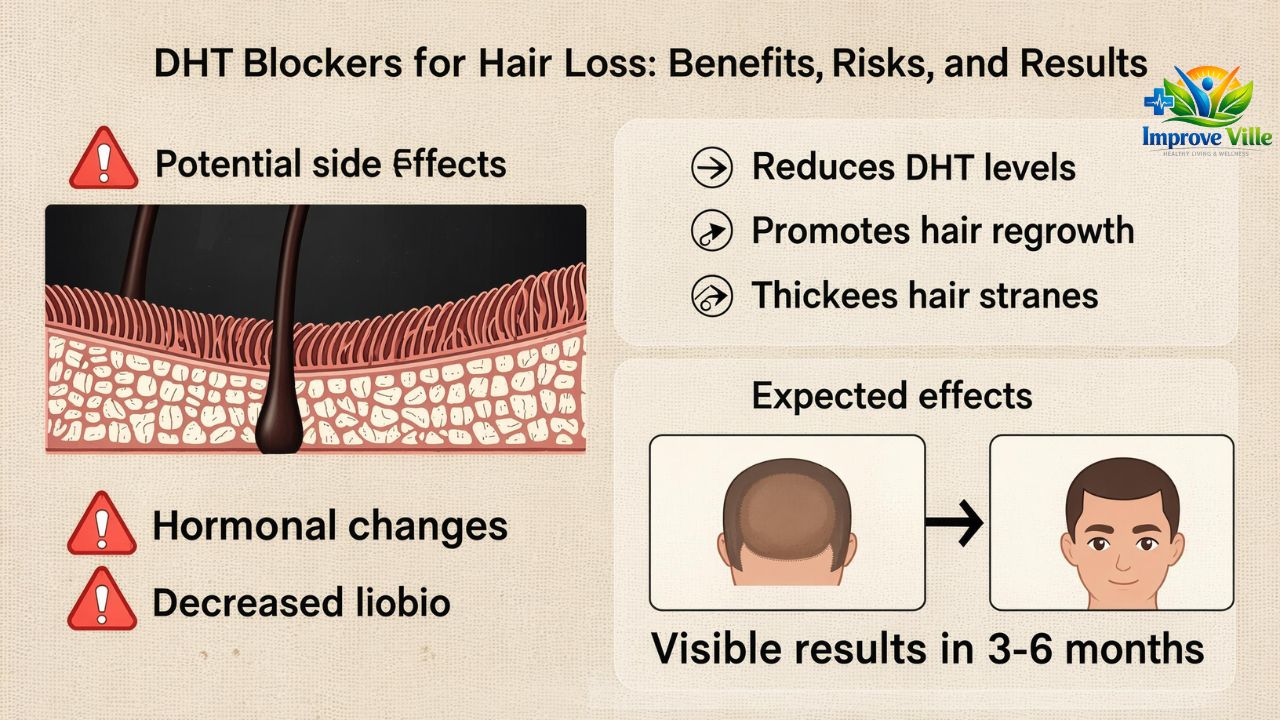

What Are dht blockers and Do They Really Help With Hair Loss?
Hair loss has a way of sneaking into your life quietly. One day your hairline looks a little different in the mirror, or you notice more strands in the shower drain than usual. That is usually when people start searching for dht blockers and wondering whether they are the missing piece in their hair growth routine.
The topic matters because DHT is not just another trendy term in hair care. It is a hormone linked to the most common type of progressive hair thinning: androgenetic alopecia, often called male or female pattern hair loss. Understanding how it works can help you make calmer, smarter choices instead of buying every serum, supplement, or shampoo that promises thicker hair overnight.
The truth is more balanced than most marketing makes it sound. Some approaches can reduce DHT activity in meaningful ways, while others offer mild support at best. Some people see real improvement, some maintain what they have, and some need a completely different treatment plan because DHT is not the only reason hair can shed.
This guide breaks it all down in plain language: what DHT does, how blockers work, which options have the strongest evidence, what natural ingredients may or may not do, and how to build a realistic plan without putting your health at risk.
Understanding DHT: The Hormone Behind Pattern Hair Loss
DHT stands for dihydrotestosterone. It is made when the body converts testosterone using an enzyme called 5-alpha-reductase. Both men and women produce DHT, although levels and sensitivity vary from person to person.
DHT is not “bad” by default. It plays a role in normal male development, body hair growth, and other androgen-related functions. The problem begins when genetically sensitive hair follicles react strongly to DHT. In those follicles, DHT can gradually shorten the growth phase of the hair cycle and cause hairs to become thinner, shorter, and weaker over time.
Why Some Hair Follicles Are More Sensitive
Pattern hair loss is not simply about having “too much DHT.” Many people with androgenetic alopecia have normal hormone levels. The key issue is follicle sensitivity.
Think of it like sunlight. Two people can stand in the same sun, but one burns faster because their skin is more sensitive. In a similar way, two people may have similar DHT levels, but one person’s scalp follicles may be more genetically vulnerable.
This is why hair loss often follows recognizable patterns. In men, thinning commonly starts at the temples, hairline, or crown. In women, it often appears as widening along the part or diffuse thinning across the top of the scalp.
What Follicle Miniaturization Means
Follicle miniaturization is the slow shrinking of hair follicles. A healthy terminal hair becomes finer over repeated growth cycles until it looks more like soft, wispy hair. This is why thinning can appear gradual for years before it becomes obvious.
The encouraging part is that miniaturized follicles are not always permanently inactive. When treatment begins early enough, some follicles may produce thicker-looking hairs again. That is why timing matters. The earlier you understand what is happening, the better your chances of preserving density.
How dht blockers Work
In simple terms, dht blockers aim to reduce the effect of DHT on hair follicles. They can do this in a few different ways. Some reduce the amount of DHT your body makes. Others may interfere with how DHT interacts with the follicle. Some products marketed this way simply support scalp health without meaningfully changing hormones.
The strongest medical category is 5-alpha-reductase inhibitors. These reduce the enzyme activity that converts testosterone into DHT. Finasteride and dutasteride are the best-known examples. They are not cosmetic products; they are medications that can affect hormone pathways throughout the body.
Blocking DHT vs. Supporting Hair Growth
It helps to separate two ideas: reducing DHT and stimulating growth. They are related, but they are not the same.
A DHT-focused treatment aims to slow the miniaturization process. A growth stimulant, such as minoxidil, works differently by helping improve the hair growth cycle. Many people use both types of approaches because one helps protect follicles from ongoing hormonal pressure while the other encourages stronger growth.
That is why a person may not get the best result from a single shampoo or capsule. Hair loss is biological, slow-moving, and often influenced by several factors at once.
Why Results Take Time
Hair grows in cycles. Even effective treatments do not change your hairline in a few weeks. Most people need at least three to six months to judge early progress, and closer to twelve months for a fairer picture.
It is also common to notice shedding when starting certain treatments. This can be alarming, but in some cases it reflects a shift in the hair cycle rather than permanent worsening. Still, sudden or severe shedding should be discussed with a dermatologist because not all shedding is pattern hair loss.
Prescription Options With the Strongest Evidence
When people talk about clinically proven dht blockers, they are usually referring to finasteride and dutasteride. These medications have the most direct impact on DHT production.
Finasteride
Finasteride is commonly prescribed for male pattern hair loss. It works by inhibiting type II 5-alpha-reductase, lowering DHT levels and helping slow follicle miniaturization. For many men, it is used to maintain existing hair and improve thickness over time.
Finasteride is not a quick fix. The usual expectation is gradual stabilization first, followed by possible visible improvement. Some people respond very well, while others mainly notice that shedding slows or their hair loss stops getting worse.
Possible side effects can include reduced libido, erectile changes, mood changes, breast tenderness, or other hormone-related symptoms. Not everyone experiences side effects, but they are important enough to discuss before starting treatment.
Dutasteride
Dutasteride blocks both type I and type II 5-alpha-reductase, which means it can reduce DHT more broadly than finasteride. It is approved for benign prostate enlargement in many places and is sometimes used off-label for hair loss depending on country, clinician judgment, and patient profile.
Because it can suppress DHT more strongly, dutasteride may be considered when finasteride is not enough. However, stronger action does not automatically mean it is the right choice for everyone. It may also carry similar or potentially more persistent side effect concerns because it stays in the body longer.
Topical Finasteride
Topical finasteride has become a popular option for people who want a more localized approach. The idea is to deliver the medication to the scalp while potentially reducing systemic exposure.
That sounds appealing, but “topical” does not always mean “side-effect free.” Some absorption can still occur. The exact formula, dose, application amount, and frequency matter. Anyone considering it should use a properly prescribed or professionally guided product rather than guessing with unregulated mixtures.
Natural Ingredients Often Called dht blockers
Many people prefer to start with natural products because they feel gentler and more accessible. That is understandable. The challenge is that natural ingredients vary widely in quality, dosage, and evidence.
Some may have early research, traditional use, or plausible mechanisms. Others are mostly supported by marketing. Natural does not always mean harmless, especially when supplements can interact with medications, affect hormones, or cause digestive and allergic reactions.
Saw Palmetto
Saw palmetto is one of the most common natural ingredients promoted for DHT-related hair thinning. It is believed to have mild 5-alpha-reductase-inhibiting activity, although it is not as well established as prescription medications.
Some users report reduced shedding or improved thickness, while others notice no difference. If someone wants to try it, it is wise to treat it as a supportive option rather than a guaranteed replacement for medical treatment.
Pumpkin Seed Oil
Pumpkin seed oil is another popular choice. It contains fatty acids and plant compounds that may support scalp and hair health. Some research has explored its potential role in hair growth, but the evidence is still limited compared with medications.
It may be used orally as a supplement or topically in hair products. The main concern is not usually dramatic hormonal impact, but product quality, dosage, and expectations.
Green Tea Extract
Green tea contains compounds such as EGCG, which is often discussed for antioxidant activity and possible effects on androgen pathways. In hair care, it is more realistically viewed as a scalp-supportive ingredient rather than a powerful DHT solution.
Green tea shampoos, tonics, or supplements may appeal to people who want a gentle addition. However, concentrated extracts can cause side effects in some people, especially at high doses, so supplement use deserves caution.
Caffeine
Caffeine is frequently used in hair shampoos and scalp products. It is not a true DHT-lowering medication, but it may support follicle activity in laboratory settings and can make products feel energizing on the scalp.
The practical issue is contact time. A shampoo that rinses off after one minute may not deliver dramatic effects. Leave-on products may have more potential, but expectations should remain realistic.
Rosemary Oil
Rosemary oil has gained attention as a natural hair growth ingredient. It is not best understood as a direct DHT blocker, but rather as a botanical that may support scalp circulation and a healthier scalp environment.
Essential oils must be diluted properly. Applying undiluted rosemary oil can irritate the scalp, and irritation can worsen shedding or inflammation. For sensitive scalps, patch testing is a smart first step.
Do DHT-Blocking Shampoos Work?
DHT-focused shampoos are appealing because they feel low-risk and easy to add to a routine. Some contain ketoconazole, saw palmetto, caffeine, rosemary, zinc, or other scalp-focused ingredients.
A shampoo can help if you have dandruff, oiliness, itching, inflammation, or buildup that makes your scalp environment worse. But a rinse-off product usually has limited time to affect hormone pathways deeply. That does not mean it is useless. It just means it should not be the entire plan if your hair loss is progressing.
When a Shampoo Makes Sense
A good shampoo can be useful when your scalp feels oily, flaky, irritated, or inflamed. Scalp inflammation can make hair shedding feel worse and may interfere with how comfortable you are using leave-on treatments.
Look for a shampoo that solves your actual scalp issue. If you have dandruff, an anti-dandruff ingredient may matter more than a trendy botanical. If your scalp is dry, a harsh clarifying shampoo may create more problems than it solves.
What to Avoid
Avoid products that promise dramatic regrowth in a few washes. Hair does not work that way. Also be cautious with shampoos loaded with strong fragrance, harsh detergents, or multiple essential oils if your scalp is sensitive.
A shampoo can support your routine. It should not be sold to you as a miracle.
dht blockers for Men vs. Women
Men and women can both experience androgenetic alopecia, but treatment decisions can be different. Hormones, pregnancy considerations, menstrual health, menopause, polycystic ovary syndrome, and medication safety all matter.
For men, finasteride is commonly discussed as a first-line oral DHT-lowering option. For women, the picture is more individualized. Some women may be prescribed anti-androgen therapies, but these decisions require medical guidance.
Important Safety Notes for Women
Women who are pregnant, trying to become pregnant, or could become pregnant must be especially careful with medications that affect DHT. Finasteride and dutasteride can be unsafe in pregnancy and should not be handled casually.
Female pattern hair loss can also overlap with iron deficiency, thyroid problems, postpartum shedding, stress-related shedding, medication effects, or inflammatory scalp conditions. That is why diagnosis matters before choosing a hormone-targeting product.
Why Testing May Help
Not everyone needs extensive lab testing, but it can be useful when hair loss is sudden, diffuse, severe, or accompanied by acne, irregular cycles, fatigue, weight changes, or excess facial hair.
A clinician may check ferritin, thyroid markers, vitamin D, hormone levels, or other indicators based on your symptoms. Treating the wrong problem wastes time. More importantly, it can let an underlying issue continue unchecked.
Benefits You Can Realistically Expect
The biggest benefit of DHT-focused treatment is usually stabilization. That may sound less exciting than regrowth, but stopping the loss is a major win. If you keep more hair, your future options become better.
Some people also see thicker hair, better coverage, and improved confidence. The best results often happen when treatment begins early, before follicles have been inactive for too long.
What Success Looks Like
Success does not always mean a brand-new hairline. It may look like fewer hairs falling out, a crown that photographs better, a part that looks less wide, or hair that feels denser when styled.
Progress is easiest to track with consistent photos. Take pictures in the same lighting, same angle, and same hairstyle once a month. Daily mirror checks can make you anxious because hair changes slowly.
What Treatment Cannot Always Do
A DHT-focused plan may not restore areas where follicles are no longer active. It also may not fix shedding caused by illness, crash dieting, low iron, thyroid disease, autoimmune hair loss, scalp psoriasis, or medication changes.
This is why a careful diagnosis is not a formality. It is the difference between choosing the right tool and fighting the wrong battle.
Side Effects and Safety Considerations
Any treatment that changes hormone pathways deserves respect. Many people use prescription options without major problems, but side effects are possible and should not be brushed aside.
Before starting dht blockers in medication or supplement form, consider your health history, current medications, fertility plans, pregnancy risk, mental health history, and tolerance for possible side effects.
Possible Side Effects
Depending on the product or medication, side effects may include:
- Lower libido
- Erectile or ejaculation changes
- Breast tenderness or swelling
- Mood changes
- Headache
- Digestive upset
- Scalp irritation from topical products
- Allergic reactions to botanicals or fragrances
Not every symptom is caused by treatment, but new changes should be taken seriously. If something feels off, speak with a healthcare professional rather than forcing yourself to continue.
Who Should Be Extra Careful
Extra caution is important for people who are pregnant, trying to conceive, breastfeeding, managing hormone-sensitive conditions, taking multiple medications, or dealing with unexplained symptoms.
Supplements are not automatically safer than prescriptions. They can be poorly standardized, contaminated, or taken at doses that have not been well studied. Choose reputable brands and tell your clinician what you are taking.
Building a Smarter Hair Loss Routine
The best routine is not always the most complicated one. In fact, many people do better with a simple plan they can follow consistently for a year than with ten products they abandon after six weeks.
A strong routine usually includes diagnosis, scalp care, a growth-supporting treatment if appropriate, a DHT-focused option if appropriate, nutrition support, and realistic tracking.
Step 1: Confirm the Type of Hair Loss
Start by identifying whether your pattern fits androgenetic alopecia. Gradual thinning at the temples, crown, or part line may suggest pattern loss. Sudden shedding all over the scalp may point to telogen effluvium. Patchy bald spots may suggest alopecia areata or another condition.
A dermatologist can examine your scalp, perform a pull test, use dermoscopy, and order labs when needed. This can save months of guessing.
Step 2: Choose Evidence-Based Anchors
For many people, the core options are minoxidil, finasteride, dutasteride, or professionally guided topical formulas. The right choice depends on sex, age, goals, medical history, and risk tolerance.
Natural products can be added, but they should not distract from treatments with stronger evidence if hair loss is progressing quickly.
Step 3: Support the Scalp
A healthy scalp does not guarantee regrowth, but an irritated scalp can make everything harder. Manage dandruff, itching, oiliness, tight hairstyles, harsh bleaching, and aggressive brushing.
Gentle habits matter. Use a shampoo that fits your scalp type, avoid scratching, and be careful with tight buns, braids, or extensions that pull on fragile hairs.
Step 4: Check Nutrition Without Overdoing Supplements
Hair needs adequate protein, iron, zinc, vitamin D, essential fatty acids, and overall calories. If you are under-eating, crash dieting, or dealing with low ferritin, hair growth may suffer.
But more supplements are not always better. High doses of certain nutrients can be harmful. The best approach is to correct confirmed gaps rather than taking random megadoses.
Step 5: Track for 6–12 Months
Hair treatment requires patience. Pick a start date, take baseline photos, and review progress every month. Try not to change everything at once, because then you will not know what helped.
If you see no stabilization after six to twelve months, it may be time to revisit the diagnosis or adjust your treatment plan.
Common Mistakes People Make
Hair loss can feel emotional, and emotional decisions often lead to expensive mistakes. The goal is not to shame anyone. Most people panic at first. The goal is to help you avoid wasting time.
Starting Too Late
Waiting years can limit what treatment can recover. If you suspect progressive thinning, it is better to act early. Even if you are not ready for medication, getting a diagnosis can help you understand your options.
Expecting Fast Regrowth
Hair grows slowly. A product that claims major regrowth in thirty days is usually overselling. Early wins may include less shedding, better scalp comfort, or small baby hairs, but meaningful density takes time.
Using Too Many Products
Layering multiple serums, oils, sprays, and supplements can irritate the scalp and confuse your results. Start with a clear plan. Add products one at a time when possible.
Ignoring Side Effects
Pushing through serious side effects is not a badge of honor. Hair matters, but so does your overall well-being. A good plan should support confidence without making you feel trapped.
When to See a Dermatologist
You should consider seeing a dermatologist if your hair loss is sudden, patchy, painful, itchy, scaly, or rapidly worsening. You should also get help if you are a woman with new thinning plus irregular periods, acne, facial hair growth, fatigue, or other hormone-related symptoms.
Professional care is especially useful if you are considering prescription dht blockers, combining multiple treatments, or dealing with side effects. A dermatologist can help you balance benefits and risks based on your specific situation.
Questions to Ask at Your Appointment
Bring photos if you have them. Also write down when the shedding started, any recent illnesses, new medications, diet changes, stressors, family history, and products you have tried.
Helpful questions include:
- What type of hair loss do I have?
- Is DHT likely playing a role?
- Should I have bloodwork?
- Which treatment has the best risk-benefit profile for me?
- How long should I try this before judging results?
- What side effects should I watch for?
- Can I combine this with minoxidil or other therapies?
The more specific your questions, the more useful your appointment will be.
Myths About dht blockers
Hair loss advice online is full of confident claims. Some are partly true, some are exaggerated, and some are simply wrong.
Myth: All DHT Is Bad
DHT has normal roles in the body. The goal is not to eliminate every trace of it. The goal is to reduce its harmful effect on sensitive scalp follicles when appropriate.
Myth: Natural Means Risk-Free
Natural ingredients can still cause side effects, interact with medications, or irritate the scalp. Essential oils, concentrated extracts, and supplements should be used thoughtfully.
Myth: A Shampoo Can Replace Medical Treatment
A shampoo may improve scalp health, but it usually cannot match the effect of prescription hormone-targeting medication. It can be part of a plan, not the whole plan.
Myth: If You Shed, the Treatment Failed
Some shedding can happen when hair cycles shift. However, severe or prolonged shedding should be checked. Do not assume every shed is “normal” or every shed is “bad.”
FAQ
What are dht blockers?
They are treatments, ingredients, or medications intended to reduce the production or effect of dihydrotestosterone, a hormone linked to pattern hair loss in genetically sensitive follicles.
Do they regrow hair or just stop hair loss?
They often help most by slowing or stabilizing hair loss. Some people also see thicker hair or regrowth, especially when treatment starts early and follicles are still active.
How long do results take?
Most people need at least three to six months to notice early changes and up to twelve months to judge results more fairly. Hair growth is slow, so consistency matters.
Are natural options strong enough?
Natural options may support scalp and hair health, but they usually have weaker evidence than prescription medications. They may be useful for mild concerns or as add-ons, but they are not guaranteed.
Can women use DHT-lowering treatments?
Some women may use anti-androgen or DHT-focused treatments under medical supervision, but pregnancy risk and hormone health must be considered carefully. Women should not casually use medications like finasteride or dutasteride without professional guidance.
Is minoxidil a DHT blocker?
No. Minoxidil is not primarily a DHT blocker. It works by supporting the hair growth cycle and can be combined with DHT-focused treatments when appropriate.
Will hair loss return if I stop treatment?
If your hair loss is genetic and progressive, stopping an effective treatment may allow the miniaturization process to continue. Hair maintained by treatment can gradually be lost after discontinuation.
Are side effects permanent?
Many side effects improve after stopping or adjusting treatment, but persistent symptoms have been reported by some users. This is one reason to discuss risks with a qualified clinician before starting.
Can diet lower DHT?
A healthy diet supports hair growth, but diet alone is unlikely to significantly control genetically driven pattern hair loss. Correcting deficiencies can help if nutrition is contributing to shedding.
Conclusion
Hair loss is personal. It can affect how you see yourself, how you style your hair, and how confident you feel walking into a room. That is why it deserves more than panic buying and miracle claims.
The most important thing to understand is that DHT-related hair loss is usually gradual, biological, and treatable to some degree when addressed early. dht blockers can play a meaningful role, especially when they are chosen carefully and used as part of a realistic plan.
For some people, that plan may include prescription medication. For others, it may begin with minoxidil, scalp care, nutrition support, or a dermatologist visit to confirm what is really going on. Natural products may have a place, but they should be viewed with clear expectations.
You do not need to solve everything overnight. Start with the facts, protect your health, track your progress, and make decisions based on evidence rather than fear. Healthy hair goals are not just about regrowth. They are about choosing a path you can feel good about for the long run.